
Gold in Australia
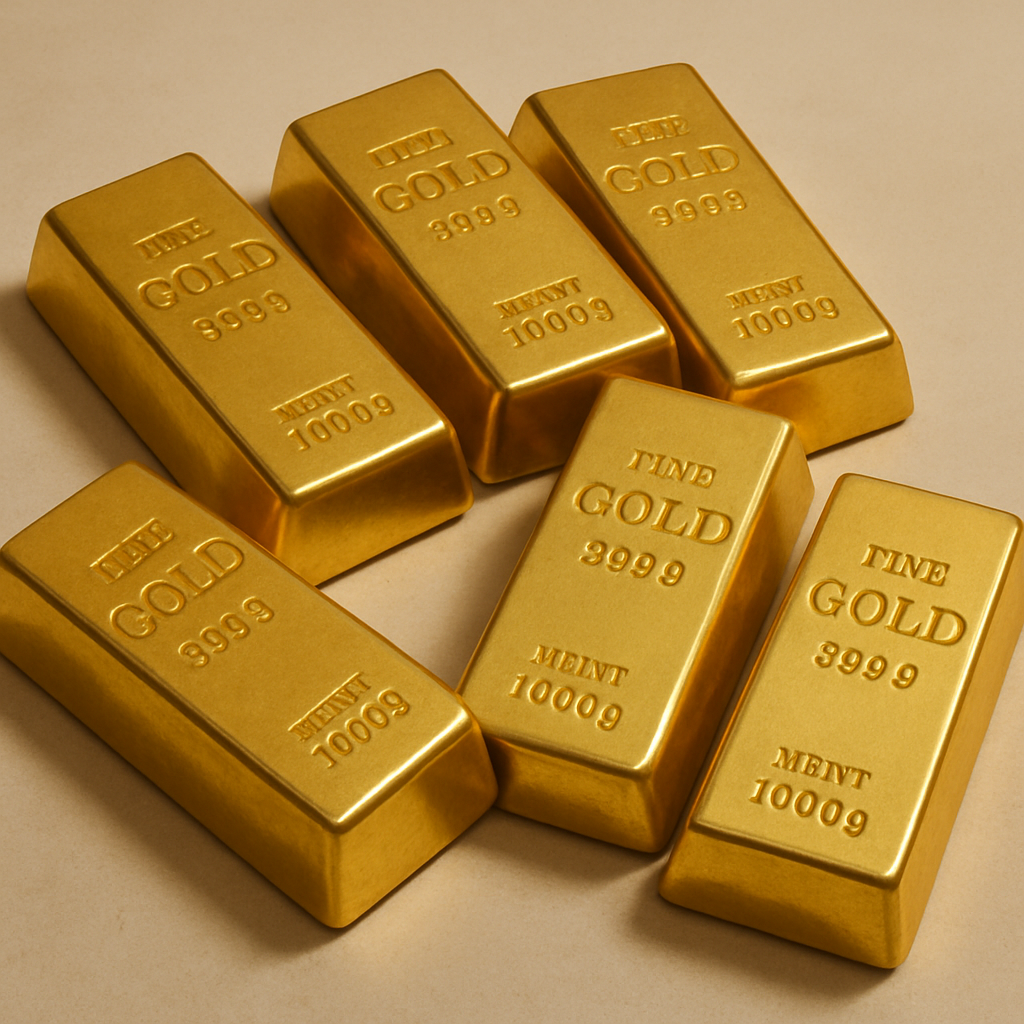
Gold in Australia: History, Mining, Prospecting, Prices and Investment
Gold in Australia refers to naturally occurring gold deposits, historic and modern gold mining, recreational prospecting and fossicking, gold products such as bullion and jewellery, and the wider economic and investment market. Gold occurs across several geological provinces, with major historic and current activity concentrated in Western Australia, Victoria, New South Wales, Queensland and other regions.
Australia remains a major gold-producing country. Geoscience Australia’s 2025 assessment reported 284 tonnes of Australian mine production in 2024 and 12,955 tonnes of Economic Demonstrated Resources as at December 2024. Production and resource figures change over time, so current government releases should be used for the latest statistics.
For recreational prospectors, there is no single Australia-wide licence. Rules differ by jurisdiction and by land type. For example, Queensland requires a fossicking licence, Victoria requires a current miner’s right for recreational prospecting, NSW requires a permit to fossick in a NSW state forest, and Western Australia requires a Miner’s Right to prospect or fossick on Crown land. Other land and activity restrictions can also apply.
Executive Summary
- Australia has a long gold-mining history beginning with major discoveries in the 19th century and continuing through a large modern mining industry.
- Western Australia is a dominant centre of contemporary gold production, while Victoria and New South Wales contain internationally recognised historic goldfields and important deposits.
- Geoscience Australia’s 2025 assessment recorded 284 tonnes of Australian gold mine production in 2024.
- The same assessment reported 4,785 tonnes of ore reserves and 12,955 tonnes of Economic Demonstrated Resources as at December 2024.
- Major Australian gold regions include the Eastern Goldfields of Western Australia, the Victorian Goldfields and gold-bearing areas of New South Wales and Queensland.
- Modern gold mining may involve open-pit mining, underground mining, processing, gravity recovery, flotation, leaching and refining depending on the deposit.
- Gold prospecting and fossicking rules are not uniform nationally. The relevant state or territory authority and land manager must be checked before entering or collecting.
- Natural gold can occur as nuggets, flakes, grains and particles within alluvial deposits, quartz veins and mineralised rock.
- The Australian gold price is influenced by international gold prices, the Australian dollar, investor demand, central-bank activity, interest-rate expectations and market risk sentiment.
- Gold bullion is generally purchased for its metal value, while jewellery and collectible pieces may include significant design, craftsmanship or rarity premiums.
- Australian tax treatment depends on the product, transaction and taxpayer circumstances. The ATO’s GST guidance contains specific concepts for precious metals in an investment form.
- Gold can diversify a portfolio, but it does not guarantee returns and physical gold does not generate interest or dividends simply because it is held.
1. Where Is Gold Found in Australia?
Gold is found across a broad range of Australian geological settings. Major concentrations occur in Western Australia and the eastern states, with important deposits associated with ancient rocks, mineralised belts and geological structures. Some gold occurs in primary hard-rock deposits, while weathering and erosion can release gold into streams and sediments, producing alluvial deposits that have historically attracted prospectors.
Region | Gold significance | Examples / context |
Western Australia | Dominant modern production region and major exploration province | Kalgoorlie–Boulder, Eastern Goldfields, Goldfields-Esperance |
Victoria | Historic gold-rush heartland with major goldfields and modern mining | Bendigo, Ballarat, Castlemaine, Stawell, Woods Point |
New South Wales | Major historic goldfields and large modern operations | Cadia near Orange, Central West and Lachlan Orogen |
Queensland | Historic and recreational prospecting areas plus modern mining | Charters Towers, Palmer River and other mineral provinces |
South Australia | Gold occurs in several mineral provinces | Central and northern regions contain gold occurrences and deposits |
Northern Territory | Gold mining and prospecting occur in several regions | Tanami and Pine Creek mineral regions |
Tasmania | Historic gold occurrences and small-scale prospecting context | Several mineralised areas across the state |
2. What Are Australia’s Best-Known Goldfields?
Australia’s best-known goldfields are strongly connected to the 19th-century gold rushes and the development of inland mining centres. Geoscience Australia identifies the Victorian Goldfields as including Bendigo, Ballarat, Castlemaine, Stawell and Woods Point. In Western Australia, Coolgardie and Kalgoorlie became major centres during the Eastern Goldfields rush of the 1890s.
Goldfield / district | State | Why it is notable |
Eastern Goldfields | Western Australia | Major modern gold-producing province; Kalgoorlie–Boulder is a major mining centre |
Kalgoorlie–Boulder | Western Australia | Historic gold-rush centre and major contemporary mining region |
Coolgardie | Western Australia | Important 1890s gold-rush town and historic goldfield |
Bendigo | Victoria | Major Victorian goldfield and historic mining city |
Ballarat | Victoria | Major gold-rush centre and site of the Eureka Stockade context |
Castlemaine | Victoria | Important historic goldfield |
Stawell | Victoria | Long-established gold-mining district |
Woods Point | Victoria | Historic goldfield in eastern Victoria |
Cadia district | New South Wales | Major modern copper-gold mining district near Orange |
Charters Towers | Queensland | Historic Queensland gold-mining centre |
Geoscience Australia notes that the discovery of gold in Victoria in 1851 triggered Australia’s first major gold rush and a sequence of later rushes. Discoveries at Coolgardie and Kalgoorlie in the early 1890s transformed Western Australia’s development.
3. A Short History of Australian Gold
Gold was known in Australia before the great colonial rushes, but the discoveries of the 1850s changed the country. The Victorian gold rush began in 1851 and attracted large numbers of people from other parts of Australia and overseas. Ballarat and Bendigo became major centres, while other Victorian fields expanded rapidly.
The gold rushes affected more than mining. Population growth stimulated demand for roads, rail, shipping, accommodation, food, banking and other services. Geoscience Australia notes that within a decade of the gold rushes to Bathurst, Ballarat and Bendigo, Australia’s population had trebled to more than one million people.
The gold rush period also produced social conflict. The Eureka Stockade at Ballarat in 1854 grew from opposition to the miner’s licence system and became an important episode in Australian political history.
Western Australia’s gold rushes followed later. Major discoveries at Coolgardie and Kalgoorlie in the early 1890s helped transform the colony’s population, infrastructure and economic prospects. Modern mining has since evolved through improved geology, drilling, metallurgy, mechanisation, environmental management and large-scale processing.
Gold’s importance relative to Australia’s overall mineral sector changed during the 20th century as iron ore, coal and other commodities expanded. Gold nevertheless experienced a major resurgence in the 1980s and 1990s as technology made it more economical to process lower-grade ores.
4. How Much Gold Does Australia Produce?
Geoscience Australia’s 2025 assessment recorded 284 tonnes of Australian gold mine production in 2024. It also reported 141 operating gold mines in the assessment dataset. The 2024 production figure was 4% lower than the 296 tonnes reported for 2023 in the same series.
National gold indicator | Latest figure used in this guide | Reference date |
Gold mine production | 284 tonnes | 2024 |
Gold ore reserves | 4,785 tonnes | December 2024 |
Economic Demonstrated Resources | 12,955 tonnes | December 2024 |
Operating gold mines in AIMR assessment | 141 | 2024 |
Gold export earnings forecast | A$68 billion | 2025–26 |
Gold export earnings forecast | A$73 billion | 2026–27 |
The production and resource figures come from Geoscience Australia’s AIMR 2025 assessment, while the export-earnings forecasts come from the Australian Government’s June 2026 Resources and Energy Quarterly. These categories should not be mixed: mineral resources and ore reserves describe geological and economic inventories, while mine production measures material produced in a particular period.
The Australian Government’s June 2026 outlook reported that gold export earnings were forecast to remain exceptionally strong, supported by high gold prices and increased export volumes. Forecasts are not guarantees and should be updated when a new Resources and Energy Quarterly is released.
5. Which Australian States Produce the Most Gold?
Western Australia is Australia’s dominant gold-producing state and hosts the country’s largest concentration of modern gold mining. Victoria and New South Wales are also significant gold jurisdictions, while Queensland, South Australia and the Northern Territory have important deposits and mining histories.
Production rankings can change from year to year as mines open, expand, pause, close or change output. For publication, current state-by-state production should be taken from the latest Geoscience Australia and Australian Government datasets rather than treated as a permanent ranking.
State / territory | General position in Australian gold story | Important areas |
Western Australia | Largest contemporary production centre | Eastern Goldfields, Kalgoorlie–Boulder, Goldfields-Esperance |
Victoria | Major historic gold state with ongoing mining and prospecting | Bendigo, Ballarat, Stawell, Castlemaine |
New South Wales | Major historic and modern gold jurisdiction | Central West, Cadia, Lachlan Orogen |
Queensland | Important historic and current gold province | Charters Towers, Palmer River and other mineral belts |
South Australia | Gold-bearing mineral provinces and exploration | Central and northern regions |
Northern Territory | Gold mining and exploration in several regions | Tanami, Pine Creek |
Tasmania | Smaller but established gold history and occurrences | Several mineralised districts |
6. What Are Australia’s Major Gold Mines?
Australia’s major gold mines include large operations in Western Australia and major gold or copper-gold operations in other states. The exact list changes as projects are developed, expanded, suspended or closed. A current project list should therefore be checked against official company and government sources.
Operation / district | State | General significance |
Kalgoorlie–Boulder / Super Pit district | Western Australia | One of Australia’s most recognisable modern gold-mining districts |
Boddington | Western Australia | Large-scale mine producing gold alongside other minerals |
Cadia | New South Wales | Major copper-gold operation near Orange |
Tropicana | Western Australia | Large-scale gold operation in the Goldfields-Esperance region |
St Ives | Western Australia | Established gold operation in the Goldfields |
Sunrise Dam | Western Australia | Major gold mine in the Eastern Goldfields |
Fosterville | Victoria | High-profile modern Victorian underground gold mine |
Project ownership and operating status can change. The names above are examples for topical coverage, not a ranking by current production.
7. How Is Gold Mined in Australia?
Gold mining begins with exploration and geological modelling. Once a potentially economic deposit is identified, companies may conduct drilling, sampling, metallurgical testing, resource estimation, feasibility studies, environmental assessment, approvals and mine development.
Stage | What happens |
Exploration | Geologists identify targets using mapping, geochemistry, geophysics and drilling. |
Resource definition | Drilling and sampling improve understanding of grade, geometry and continuity. |
Economic assessment | Engineers and geologists assess whether the deposit can potentially be mined profitably. |
Approvals | Environmental, land, heritage, water and mining approvals may be required. |
Mine development | Roads, pits or underground workings, processing facilities and services are constructed. |
Mining | Ore is extracted using open-pit, underground or other appropriate methods. |
Processing | Ore is crushed, ground and processed to recover gold using methods suited to the ore. |
Refining | Recovered material is refined to produce higher-purity gold products. |
Rehabilitation | Mining areas are progressively rehabilitated under applicable plans and approvals. |
Open-Pit vs Underground Gold Mining
Method | Typical use | Key consideration |
Open-pit | Near-surface deposits that can be mined economically from a large excavation | Large surface footprint and waste-rock movement |
Underground | Deeper or structurally constrained deposits | Requires underground access, ventilation, ground control and specialised systems |
Alluvial / small-scale recovery | Gold concentrated in sediments or shallow deposits | Highly location- and regulation-dependent |
8. How Is Gold Recovered From Ore?
The processing route depends on the ore’s mineralogy, gold grain size, liberation characteristics and associated minerals. Crushing and grinding may be followed by gravity recovery, flotation, leaching or combinations of these methods.
- Gravity recovery can capture relatively coarse or liberated gold.
- Flotation can concentrate minerals when gold is associated with sulphide minerals.
- Leaching can dissolve gold from suitably prepared material for subsequent recovery.
- Carbon-based recovery circuits are widely used in many gold operations.
- Smelting and refining convert recovered material into saleable gold products.
- Water, reagents, energy and tailings management are important parts of modern processing.
Processing chemistry and plant design are highly technical and site-specific. Recreational prospectors should not attempt industrial recovery methods without appropriate knowledge, equipment, approvals and safety controls.
9. Where Does Natural Gold Occur?
Natural gold can occur in several forms. Primary gold may be hosted within quartz veins or mineralised rock. Weathering can release gold from primary deposits. Streams and erosion can then transport dense gold particles into alluvial environments, where flakes and nuggets may accumulate.
Gold form | Description |
Nugget | Naturally occurring piece of relatively coarse gold, often recovered from alluvial or weathered material |
Flake | Thin, flattened gold particle often associated with alluvial sediments |
Fine gold | Very small particles that may require careful recovery methods |
Quartz-hosted gold | Gold associated with quartz veins and mineralised rock |
Alluvial gold | Gold concentrated in sediments by erosion and water movement |
A gold nugget’s market value can differ from its melt value. Shape, rarity, locality, natural form and collector demand can influence the price paid by specialist buyers.
10. Can You Still Find Gold in Australia?
Yes. Recreational prospecting and fossicking remain possible in parts of Australia, and commercial exploration and mining continue to discover and develop gold deposits. Finding gold is not, however, the same as having a legal right to enter land or remove minerals.
The practical question is not simply “where is there gold?” but “where can I legally prospect, using which tools, under what permission, and what can I keep?” Those questions must be answered for the specific jurisdiction and land parcel.
11. Do You Need a Licence or Permission to Prospect?
Requirements vary by state and territory. There is no single national Australian gold-prospecting licence. Rules can also vary according to whether the land is Crown land, state forest, private property, a national park, a mining tenement, a designated fossicking area or another protected or regulated area.
Jurisdiction | Example current requirement | Important qualification |
Victoria | A current miner’s right is required for individuals undertaking recreational prospecting. | Protected/prohibited areas and access permissions still matter. |
Western Australia | A Miner’s Right is required to prospect or fossick on Crown land. | A Miner’s Right does not authorise mining operations; other permissions and titles may be required. |
New South Wales | A permit is required to fossick in a NSW state forest. | Check the state-forest map and restrictions before visiting. |
Queensland | A current fossicking licence is required for regulated fossicking. | Designated areas and additional landowner or camping requirements can apply. |
Northern Territory | Fossicking permits are available and required for regulated fossicking activities. | Landowner/title-holder notices or consent may be relevant. |
South Australia | Rules depend on land category and prospecting activity. | Check current South Australian government requirements. |
Tasmania | Prospecting/fossicking requirements depend on land and activity. | Check current Tasmanian government and land-manager rules. |
Examples above are not a substitute for checking the current official rules. WA states that prospecting or exploring land without the appropriate authorisation and permission is an offence. Victoria states that individuals need a current miner’s right for recreational prospecting. NSW requires a permit to fossick in NSW state forests. Queensland requires a fossicking licence. NT provides personal, club and commercial fossicking permits.
12. Prospecting Rules: What Beginners Should Check
- Identify the exact state or territory.
- Identify the exact land tenure or land manager.
- Check whether prospecting or fossicking is permitted there.
- Obtain the required licence, permit, miner’s right or permission.
- Check whether a mining tenement covers the ground.
- Check protected-area, national-park and reserve restrictions.
- Check Aboriginal cultural heritage requirements and avoid disturbing sites.
- Use only permitted tools and methods.
- Know whether you can keep, sell or trade what you find.
- Follow rehabilitation, waste, fire and safety requirements.
- Carry identification and evidence of the required permission where appropriate.
- Check closures, weather, fire danger and access conditions before travelling.
13. State-by-State Prospecting Examples
Victoria
Resources Victoria states that recreational prospecting includes looking for and collecting gems or minerals as a hobby. Individuals need a current miner’s right. Hand tools, including metal detectors for gold, may be used under the applicable rules. Machinery and explosives are not permitted, and some areas are prohibited. The current Resources Victoria page states a miner’s right costs $29.40 and lasts 10 years; this fee is time-sensitive and should be rechecked before publication.
Western Australia
Western Australia’s official guide states that prospecting is treated as mining under the Mining Act and must be appropriately authorised. A Miner’s Right is required by each person wishing to prospect or fossick on Crown land. The Miner’s Right permits access for prospecting purposes and taking and keeping samples within the stated limits, but it does not authorise mining operations.
New South Wales
Service NSW states that fossicking in a NSW state forest requires a permit. The permit covers recreational, tourist or educational purposes, and prospectors must check the state forest map because fossicking may be prohibited in some areas.
Queensland
Queensland Government states that fossicking is regulated and requires a fossicking licence. Licensed fossickers can use hand tools and may collect alluvial gold, including nuggets, within the stated rules. Machinery is not permitted under the recreational fossicking rules, and limits apply to digging depth and where fossicking may occur.
Northern Territory
The Northern Territory provides personal, club and commercial fossicking permits and forms for notifying or obtaining consent from landowners, occupiers or title holders. Exact requirements depend on the activity and location.
South Australia and Tasmania also have jurisdiction-specific rules. Because prospecting law is highly location dependent, this guide deliberately avoids claiming a single licence or permission rule for the entire country.
14. How Much Is Australian Gold Worth?
Australian gold does not have a separate universal price simply because it was mined in Australia. The value of investment-grade gold generally follows the international gold market, converted into Australian dollars, with premiums or discounts depending on the product, purity, form, dealer and transaction.
Factor | Effect on value |
International gold price | Main underlying market reference |
AUD exchange rate | Changes the Australian-dollar value of internationally priced gold |
Purity | Higher fine-gold content generally increases metal value |
Weight | More fine gold generally means greater metal value |
Product premium | Coins, small bars and collectibles can trade above metal value |
Collector value | Rare or unusual natural gold and coins may command additional premiums |
Dealer spread | The buying and selling prices differ and affect realised returns |
Condition / packaging | Can influence resale for certain products |
For current prices, readers should use a live market reference and compare actual dealer quotations. A headline gold price is not necessarily the amount a buyer will pay for a particular bar, coin or nugget.
15. What Is the Australian Gold Price Based On?
- Global spot or benchmark gold prices.
- The Australian dollar’s exchange rate against major currencies, particularly the US dollar.
- Interest-rate expectations and real yields.
- Inflation expectations.
- Central-bank gold purchases and sales.
- Geopolitical and financial-market risk.
- Investment demand and exchange-traded product flows.
- Jewellery demand and physical-market conditions.
- Mine supply, recycling and changes in production.
Gold prices can move sharply. A buyer should distinguish between a market quote, a dealer’s retail price and the amount the dealer may pay when buying the product back.
16. Buying Gold in Australia
Australians can buy gold through established bullion dealers, the Perth Mint, jewellers, banks or other financial and precious-metal channels depending on the product. The appropriate channel depends on whether the buyer wants bullion, jewellery, a collectible, professionally stored metal or financial exposure to gold.
Buying option | Best suited to | Main checks |
Gold bullion bars | Buyers seeking direct metal exposure | Purity, refiner, premium, storage and buy-back |
Gold bullion coins | Buyers seeking recognisable, divisible products | Purity, authenticity, premium and resale |
Gold jewellery | Wear, gifting and personal use | Hallmark, karat, workmanship and total price |
Gold nuggets | Collectors and specialist buyers | Provenance, natural form, weight and collector premium |
Gold-backed financial products | Investors seeking market exposure without direct custody | Structure, fees, liquidity, counterparty and regulatory status |
Professionally stored gold | Buyers prioritising custody and security | Ownership, allocation, fees, insurance and withdrawal rights |
17. How to Choose a Gold Dealer
- Verify the business identity and contact details.
- Compare the total price rather than only the advertised premium.
- Check the product’s weight, purity and manufacturer or refiner.
- Ask how authenticity is verified.
- Check delivery, insurance and security arrangements.
- Understand the dealer’s buy-back or resale process.
- Ask about fees and payment conditions.
- Keep a detailed invoice and product documentation.
- Be cautious of guaranteed-return claims or pressure to buy immediately.
- Compare several established providers where practical.
A dealer offering the lowest advertised price is not automatically the best choice. A transparent price, credible documentation and a workable resale process can be more important than a small difference in the headline quotation.
18. Australian Gold Bullion: Bars vs Coins
Factor | Bars | Coins |
Main appeal | Efficient exposure to a defined quantity of metal | Recognition, divisibility and established products |
Premium | Can be relatively low for larger bars | Varies by coin, size and design |
Divisibility | Lower for large bars | Usually higher |
Storage | Compact for larger holdings | More units can require more packaging |
Resale | Depends on refiner and product recognition | Recognised bullion coins can be easy to identify |
Collector premium | Usually limited for standard bars | Can be significant for special issues |
Beginner consideration | Compare premium per gram and authenticity | Compare premium, purity and resale market |
19. Gold Nuggets and Natural Australian Gold
Australian gold nuggets have a special place in the country’s cultural and prospecting history. Unlike standard bullion, a natural nugget can have value beyond its contained gold because collectors may pay for its shape, locality, rarity, appearance and documented provenance.
This means nugget pricing can be less straightforward than bullion pricing. Two pieces containing the same amount of gold may command different prices if one has a more attractive natural form or stronger collector appeal.
Buyers should distinguish between a nugget’s intrinsic metal value and any collector premium. When purchasing a high-value specimen, ask for weight, purity information where available, provenance and documentation.
20. Is Gold a Good Investment in Australia?
Gold can play a role in a diversified investment strategy, but it is not automatically suitable for every investor. The potential appeal is that gold can provide exposure to a globally traded asset that is different from shares, property and cash. The limitations are equally important: gold prices can fall, physical gold has storage and insurance costs, and gold does not pay interest or dividends simply because it is owned.
Potential benefit | Risk / limitation |
Portfolio diversification | Too large an allocation can create concentration risk |
Tangible asset | Physical custody creates security and insurance requirements |
Global liquidity | Dealer spreads and transaction costs still apply |
Potential hedge characteristics | Gold is not guaranteed to rise during every market shock |
Recognised store of value | Price can be volatile over shorter periods |
Available in multiple forms | Different products have different premiums, tax and liquidity |
The Australian Government’s June 2026 Resources and Energy Quarterly reported exceptionally strong gold prices and export earnings forecasts. This reflects market conditions, not a guarantee of future investment returns.
21. Australian Gold Tax: What Should Buyers Know?
Australian tax treatment depends on the nature of the gold, how it is acquired and used, the taxpayer’s circumstances and the transaction. The ATO has specific GST rules for precious metals in an investment form.
ATO GST Ruling GSTR 2003/10 explains that, for gold, silver or platinum to be in an investment form for the relevant GST definition, it must be capable of being traded on the international bullion market, bear a mark or characteristic identifying and guaranteeing its fineness and quality, and generally be traded at a price determined by reference to the spot price of the metal it contains.
Tax issue | What to verify |
GST | Whether the exact product qualifies as precious metal in an investment form |
Capital gains tax | Whether the transaction creates a taxable capital gain and how the asset is classified |
Business income | Whether buying/selling occurs as part of a business or trading activity |
Record keeping | Purchase date, price, weight, purity, seller and sale details |
Import/export | Any customs, GST or other requirements applicable to cross-border transactions |
Tax rules are circumstance-specific. Buyers should use current ATO guidance or obtain professional advice before making a significant transaction.
22. Environmental Impacts of Gold Mining
Gold mining can create economic benefits but also environmental and social impacts. Modern mining projects are subject to regulatory approvals and environmental management requirements, but the specific framework varies by jurisdiction and project.
Impact area | Potential issue | Typical management approach |
Land disturbance | Clearing, pits, waste rock and infrastructure | Planning, approvals and progressive rehabilitation |
Water | Water use, dewatering and potential contamination | Water management, monitoring and treatment |
Tailings | Storage and long-term stability | Engineered facilities, monitoring and closure planning |
Energy and emissions | Fuel and electricity consumption | Efficiency, electrification and renewable-energy measures where feasible |
Biodiversity | Habitat disturbance | Avoidance, minimisation, offsets or rehabilitation where required |
Cultural heritage | Potential impact on Aboriginal heritage | Consultation, approvals and protection requirements |
Community | Noise, traffic, employment and local change | Community engagement and impact management |
Environmental performance should be assessed using the specific project’s approvals, environmental reports and regulator information. It is not appropriate to generalise the impacts of every Australian gold mine from one operation.
23. Gold Exploration and Discovery
Exploration is the process of searching for economically significant mineral deposits. Modern gold exploration combines geological interpretation with geochemical sampling, geophysical methods, remote sensing, drilling and laboratory analysis.
- Geological mapping identifies rock types, structures and alteration patterns.
- Geochemical surveys look for anomalous concentrations of gold or associated elements.
- Geophysical surveys can identify structures or physical contrasts associated with mineralisation.
- Air-core, reverse-circulation and diamond drilling can test subsurface targets.
- Assays measure gold concentration and help define mineralised zones.
- Resource modelling converts drilling information into estimates of mineral inventory.
- Further studies determine whether a resource may support an economically viable mine.
A promising exploration result is not the same as an operating mine. Many exploration targets do not become economically viable deposits because of grade, depth, metallurgy, infrastructure, environmental, permitting or commodity-price constraints.
24. Common Mistakes and Misconceptions About Australian Gold
- Assuming that every gold-bearing location is open to the public.
- Assuming that one state or territory’s prospecting rules apply nationally.
- Confusing a miner’s right, fossicking licence, mining title and land-access permission.
- Assuming that finding gold automatically gives an unrestricted right to sell or commercially exploit it.
- Treating the spot price as the exact retail price of a physical product.
- Buying bullion without comparing the premium and buy-back spread.
- Assuming jewellery is always an efficient investment in gold.
- Assuming a gold nugget’s value equals its melt value.
- Assuming historical goldfields have the same access rules today.
- Entering private land or mining tenements without permission.
- Using machinery where recreational prospecting rules permit only hand tools.
- Assuming that high gold prices guarantee mining-company profits.
- Treating resource estimates as though all the gold were economically recoverable today.
- Making investment decisions from past gold-price performance alone.
25. Safety for Gold Prospectors
Prospecting can involve remote terrain, heat, dehydration, unstable ground, abandoned workings, snakes and other wildlife, bushfires, vehicle risks and sudden weather changes. Gold prospecting should be approached as an outdoor activity with real safety considerations.
- Tell someone where you are going and when you expect to return.
- Carry sufficient drinking water and navigation equipment.
- Check weather and fire-danger information before departure.
- Do not enter abandoned mine shafts or underground workings.
- Use appropriate eye, hand and foot protection.
- Follow detector and digging rules for the jurisdiction.
- Do not disturb heritage or culturally significant sites.
- Take rubbish with you and rehabilitate small diggings where required.
- Carry communications equipment when working in remote areas.
- Know how to respond to heat stress, dehydration and emergencies.
26. A Simple Gold-Prospecting Workflow for Beginners
Step | Action |
1. Choose a jurisdiction | Decide where you want to prospect and identify the responsible authority. |
2. Check land status | Confirm whether the area is Crown land, state forest, private land, protected land or a mining tenement. |
3. Check permission | Obtain the applicable miner’s right, fossicking licence, permit or landowner permission. |
4. Check restrictions | Review protected areas, heritage requirements, tool restrictions and closures. |
5. Prepare safely | Carry water, navigation, first aid, communications and suitable protective equipment. |
6. Use permitted methods | Stay within the rules for hand tools, detectors, digging depth and collection. |
7. Record finds | Keep notes about location, weight and specimens where useful. |
8. Leave the area responsibly | Follow rehabilitation, waste, fire and access requirements. |
9. Verify before selling | Understand whether the material can be sold and how it should be valued. |
10. Recheck rules | Regulations can change; verify before every trip. |
27. Frequently Asked Questions About Gold in Australia
Where is most Australian gold found?
Western Australia contains the largest concentration of modern Australian gold production, particularly in the Eastern Goldfields. Major historic and current gold areas also occur in Victoria, New South Wales, Queensland and other jurisdictions.
Which state produces the most gold?
Western Australia is the dominant contemporary gold-producing state. State rankings can change with mine output, so current production data should be checked against the latest government statistics.
What are Australia’s best-known goldfields?
The best-known include the Eastern Goldfields around Kalgoorlie and Coolgardie in Western Australia and the Victorian Goldfields around Bendigo, Ballarat, Castlemaine, Stawell and Woods Point.
What are Australia’s major gold mines?
Examples include large operations and districts such as Kalgoorlie–Boulder, Boddington, Tropicana and Sunrise Dam in Western Australia, Cadia in New South Wales and Fosterville in Victoria. Operating status can change.
How much gold does Australia produce?
Geoscience Australia’s 2025 assessment recorded 284 tonnes of gold mine production in 2024.
How much gold does Australia have?
Geoscience Australia’s December 2024 assessment reported 12,955 tonnes of Economic Demonstrated Resources and 4,785 tonnes of ore reserves. These are resource and reserve classifications, not quantities available for recreational prospecting.
Can you still find gold in Australia?
Yes. Recreational prospecting and fossicking remain possible in parts of Australia, and commercial exploration and mining continue. Access and collection rules vary by jurisdiction and land tenure.
Do you need a licence to prospect for gold?
It depends on the jurisdiction and land. Victoria requires a miner’s right for individual recreational prospecting; Queensland requires a fossicking licence; NSW requires a permit in state forests; and WA requires a Miner’s Right to prospect or fossick on Crown land.
Can tourists prospect for gold in Australia?
Yes, in places where recreational prospecting or fossicking is legally permitted and the visitor obtains any required permission. Tourist status does not remove state, territory or land-access requirements.
What is a gold nugget?
A gold nugget is a naturally occurring piece of relatively coarse gold, commonly found in alluvial or weathered environments. Its value can exceed its melt value when collector demand is strong.
How is Australian gold mined?
Commercial gold can be extracted through open-pit or underground mining and then processed using methods such as crushing, grinding, gravity recovery, flotation and leaching, depending on the ore.
What affects the Australian gold price?
The international gold price, AUD exchange rate, interest rates, inflation expectations, central-bank demand, investor sentiment, geopolitical risk and physical-market conditions all influence prices.
Where can Australians buy gold bullion?
Bullion can be purchased from established bullion dealers, the Perth Mint and other recognised precious-metal businesses. Buyers should compare premiums, authenticity, storage, delivery and buy-back terms.
Is gold a good investment in Australia?
Gold can have a role in diversification, but it is not guaranteed to rise and it does not pay interest or dividends simply because it is owned. Suitability depends on the investor’s objectives and risk tolerance.
What taxes may apply to Australian gold?
GST and capital-gains tax treatment depend on the product and circumstances. The ATO has specific GST rules for precious metals in an investment form. Significant transactions should be checked against current ATO guidance.
How do I verify the gold price in Australia?
Compare a current international gold benchmark with the AUD exchange rate and then check actual dealer quotations, including premiums, delivery and buy-back spreads.
Is prospecting allowed in national parks?
Not automatically. Protected-area rules vary, and many national parks and reserves prohibit or restrict prospecting. Always check the relevant land manager before entering or collecting.
Can I prospect on a mining tenement?
Do not assume you can. Mining titles can create access and mineral-right restrictions. Check the current land and title status and obtain any required permission.
Can I use a metal detector in Australia?
Metal detectors are permitted for recreational prospecting in some jurisdictions, but the rules vary by state, land type and activity. Victoria explicitly includes metal detectors for gold within its recreational prospecting guidance.
Can I sell gold I find while prospecting?
The answer depends on the jurisdiction, land tenure, type of prospecting and whether the activity becomes commercial. Queensland, for example, distinguishes occasional sale of a lucky find from repeated commercial removal that requires mining tenure.
What should beginners know before prospecting?
The first priorities are land access, the correct licence or permission, safety, protected areas, tool restrictions and cultural-heritage requirements—not simply finding a gold-rich location.
Is Australian gold better than gold from another country?
Gold is primarily valued according to purity, weight, market conditions and product characteristics. Australian origin can add provenance or collector interest in some cases, but it does not automatically make the metal intrinsically more valuable.
What is the difference between a gold resource and a reserve?
A resource is a concentration of material with reasonable prospects for eventual economic extraction under defined classifications. A reserve is the economically mineable part of a measured and/or indicated resource demonstrated by appropriate studies. The exact definitions are technical and governed by reporting standards.
Does Australia export a lot of gold?
Yes. Gold is a major Australian resource export. The June 2026 Resources and Energy Quarterly forecast gold export earnings of A$68 billion in 2025–26 and A$73 billion in 2026–27.
Where did Australia’s gold rush begin?
The major Victorian gold rush began in 1851, following earlier discoveries in New South Wales. Victoria’s discoveries at Ballarat and Bendigo became central to Australia’s gold-rush history.
What is the Eureka Stockade’s connection to gold?
The 1854 Eureka Stockade at Ballarat grew from conflict over the miner’s licence system and became a significant event in Australian political history.
Why is Kalgoorlie important to Australian gold?
Kalgoorlie and the surrounding Eastern Goldfields became major gold centres after discoveries in the early 1890s and remain central to Australia’s modern gold industry.
What are the environmental impacts of gold mining?
Potential impacts include land disturbance, water use, tailings, energy consumption, emissions, biodiversity impacts and cultural-heritage risks. Modern projects are subject to jurisdiction-specific approvals and environmental management requirements.
Is gold prospecting safe?
It can be managed as a safe outdoor activity, but remote travel, heat, wildlife, unstable ground, abandoned workings and fire conditions create real hazards. Preparation and compliance with local safety requirements are essential.