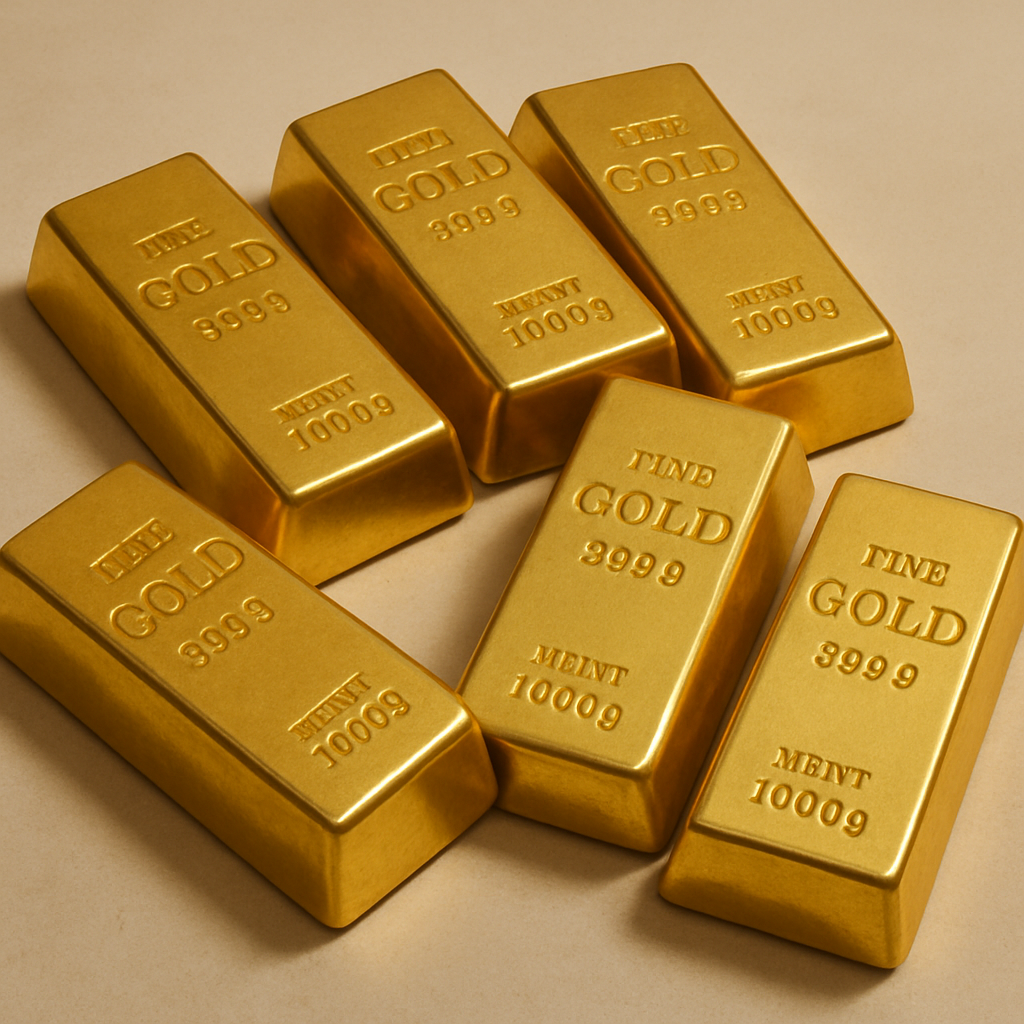
Dubai Gold Sellers
Graham Kawoya
July 11, 2026

Dubai Gold Sellers: The Complete Guide to Buying Gold in the City of Gold
Dubai did not earn the nickname “City of Gold” by accident. Walk through Deira on any given evening and you will see shop windows dripping with necklaces, bangles, and coin displays lit up like small suns. Ask a taxi driver where tourists go first, and gold sellers in Dubai will almost always be on the list, right alongside the Burj Khalifa and the Palm Jumeirah. For decades, this emirate has built its identity around one shining metal, and it has done so with a level of scale, regulation, and trust that few other cities can match.
If you are planning to buy jewelry, invest in bullion, or simply understand how the market works before you travel, this guide walks you through everything related to Dubai gold sellers. You will learn where to shop, how pricing works, what the karat numbers actually mean, how the tax system treats gold, and how to spot a trustworthy dealer from one you should avoid. Whether you are a first time visitor with a modest budget or a serious investor comparing bullion premiums, the goal here is the same: help you buy with confidence.
Why Dubai Is the World’s Favorite Gold Shopping Destination
Dubai’s reputation did not happen overnight. The emirate handles somewhere between ten and fifteen percent of all gold traded globally, an extraordinary figure for a city of its size. That volume comes from a combination of factors working together rather than any single advantage.
First, there is geography. Dubai sits at the crossroads of Africa, Asia, and Europe, making it a natural transit point for gold flowing from mining regions to consumer markets. Second, there is regulation. The Dubai Multi Commodities Centre, usually shortened to DMCC, oversees much of the trade and gives international buyers confidence that they are dealing with a properly licensed market rather than an informal one. Third, there is the tax environment. Investment grade gold enjoys favorable VAT treatment, and even retail jewelry carries one of the lowest consumption tax rates in the world at just five percent, part of which tourists can later reclaim.
Then there is sheer scale and competition. With well over a hundred licensed bullion dealers and hundreds more jewelry retailers concentrated in a handful of districts, sellers are forced to compete aggressively on making charges and service, which keeps prices reasonable for buyers. Add government oversight from the Dubai Central Laboratory, which tests gold purity and audits shops for correct weighing, and you get a market where both locals and tourists feel safe spending significant sums.
Understanding Gold Purity Before You Shop
Before you even set foot inside a store, it helps to understand how gold purity is measured in the UAE, because this single detail determines both price and durability.
Gold purity is expressed in karats, and every karat number corresponds to a specific percentage of pure gold in the alloy.
- 24K gold is 99.9 percent pure, stamped as 999. This is the standard for investment bars and coins because it holds maximum value, though it is soft and easily scratched.
- 22K gold is 91.6 percent pure, stamped as 916. This is the most common purity for traditional jewelry sold at the Gold Souk, prized for its rich yellow color and cultural significance across South Asian and Middle Eastern design traditions.
- 21K gold is 87.5 percent pure, popular in Gulf and Levantine style pieces, offering a slightly stronger alloy than 22K.
- 18K gold is 75 percent pure, stamped as 750. Because it contains more alloy metal, it resists scratches better and is often used for diamond set pieces, white gold, and rose gold designs favored by Western style buyers.
None of these purity levels are “fake.” Each simply suits a different purpose. If you want maximum resale value and investment security, 24K is the natural choice. If you want jewelry you can wear daily without worrying about bending or scratching, 18K or 21K will serve you better. Reputable Dubai gold sellers will always disclose the karat clearly on the price tag and the invoice, so if a shop is vague about purity, treat that as a warning sign rather than a minor detail.
Where to Find the Best Dubai Gold Sellers
Dubai spreads its gold trade across a mix of historic markets, modern malls, dedicated bullion districts, and a growing number of online platforms. Each venue suits a slightly different type of buyer.
The Deira Gold Souk
No conversation about Dubai gold sellers is complete without the Deira Gold Souk. Tucked into the old Al Ras district near Dubai Creek, this covered market houses well over three hundred retailers under a single wooden canopy, and it holds an estimated ten tonnes of gold on display at any given moment. It is simultaneously a major tourist attraction and a fully functioning wholesale and retail market feeding into the global gold trade.
The souk caters to every kind of buyer. You will find everything from delicate one gram investment bars to elaborate bridal sets weighing several hundred grams. Many specialist bullion dealers here offer zero making charges on plain investment bars, while jewelry stalls compete hard on design and craftsmanship. Because so many retailers sit side by side, bargaining is not just accepted, it is expected, particularly on making charges rather than the underlying gold price, which is fixed daily by the market.
The souk is open seven days a week, typically from ten in the morning until ten at night, with shorter Friday hours in the afternoon and evening. It is easily reached by metro to the Al Ras or Baniyas Square stations, and a short abra ride across Dubai Creek is a scenic and inexpensive way to arrive.
Dubai Gold and Diamond Park
For buyers who want souk level pricing without the crowds, the Gold and Diamond Park on Sheikh Zayed Road offers a modern alternative. This purpose built complex houses close to ninety retail outlets and workshops under one roof, many of which manufacture their own jewelry on site. Because the retailers are also the manufacturers, making charges here are often extremely competitive, sometimes just a few dirhams per gram, making it one of the better value destinations for buyers who want to combine an investment purchase with a custom design.
Gold Souk Sections Inside Dubai’s Malls
If you would rather shop somewhere air conditioned and prestigious, Dubai’s shopping malls have their own dedicated gold sections. The Dubai Mall houses a Gold Souk zone on its ground floor featuring more than a hundred jewelry brands, including internationally recognized names alongside established regional jewelers. Mall of the Emirates offers a similar, if smaller, selection of premium boutiques. Prices in these locations tend to be fixed rather than negotiable, and making charges run higher than in the traditional souk, but the shopping experience is far more comfortable, and returns or exchanges are usually easier to manage.
DMCC and Jumeirah Lake Towers
Serious bullion buyers and institutional investors typically look toward the Jumeirah Lake Towers district, home to the DMCC free zone. This is where many of the region’s refineries, vault operators, and large scale trading houses are based. Names like Kaloti and Emirates Gold operate refining and trading operations here, and this is also where the Dubai Gold and Commodities Exchange runs its electronic futures trading platform. If your purchase runs into the tens of thousands of dollars, this is the part of the market built to handle it professionally.
Online and Digital Gold Sellers
The market has shifted noticeably in recent years toward digital channels. A growing number of licensed platforms now let buyers lock in the daily gold rate online and either collect the physical product in person or have it insured and vaulted on their behalf. Digital gold platforms allow purchases starting from as little as one gram of 999.9 purity gold, with blockchain based proof of ownership and the option to convert digital holdings into physical bars later. This appeals strongly to younger investors and expatriates who want exposure to gold without carrying cash to a souk or storing bars at home.
When shopping online, look for a UAE trade license, a physical showroom address, clear karat labeling on every listing, and a documented return policy. A legitimate seller will never hide behind vague terms like “gold tone” when describing solid gold pieces.
Gold ATMs and Vending Machines
Dubai was also among the first cities to introduce gold vending machines, sometimes branded as Gold to Go, which dispense small bars and coins from select mall and hotel locations. These are more of a novelty for casual buyers than a serious investment channel, since premiums are generally higher than in the souk, but they remain a fun and quick way to walk away with a small souvenir bar.
How Pricing Works With Dubai Gold Sellers
Understanding how your final bill is calculated will save you from surprises at the till. Every legitimate transaction in Dubai follows the same basic formula.
The starting point is the daily gold rate, which tracks the international spot price and is displayed on electronic boards in most souk shops and updated multiple times a day. This rate is set citywide and does not vary meaningfully from shop to shop, so there is little point negotiating on the raw gold price itself.
What does vary, sometimes significantly, is the making charge. This covers the labor, design complexity, and craftsmanship that went into a piece. Simple bangles or plain chains might carry making charges of just ten to fifteen dirhams per gram, while intricate bridal sets or diamond studded pieces can push making charges well past five hundred dirhams per gram. This is exactly why two necklaces of identical weight and karat can carry very different price tags, and it is also the part of the bill where bargaining genuinely pays off, particularly in the traditional souk.
For investment bars, the calculation is simpler. You pay the spot price plus a small premium that covers refining, certification, and the dealer’s margin. Premiums in Dubai tend to be notably lower than in many Western markets thanks to the sheer density of competing dealers.
Before paying, always ask for an itemized invoice showing the weight in grams, the karat, the rate applied, and the making charge separately. This transparency is standard practice among reputable Dubai gold sellers and gives you a clear record for insurance, resale, or customs purposes later.
VAT and Tax Rules for Gold in Dubai
Tax treatment is one of the more misunderstood parts of buying gold in the UAE, so it is worth breaking down clearly.
Investment grade gold, meaning bullion bars, ingots, or coins with a purity of 99 percent or higher traded between VAT registered businesses, qualifies for zero rated VAT. This is the origin of Dubai’s reputation as a tax free gold market, and it genuinely applies to bulk bullion trading.
Retail jewelry, however, is treated differently. Any gold jewelry sold to an end consumer, whether a resident or a tourist, carries the UAE’s standard five percent VAT, applied to the full invoice value, meaning both the metal weight and the making charges. On a twenty thousand dirham necklace, for example, that adds roughly a thousand dirhams in tax.
The good news for visitors is the Tourist Refund Scheme, a fully digital system run by Planet on behalf of the Federal Tax Authority. To use it, shop only at retailers displaying the official Tax Free logo, spend a minimum of two hundred fifty dirhams per invoice, and request a tax free tag linked to your passport at the time of purchase. Before departing the UAE, validate your purchase at a Planet kiosk located at the airport, seaport, or land border, ideally before checking in your luggage since you may need to present the goods. Tourists typically recover around eighty five percent of the VAT paid, after a small processing fee is deducted, and can choose to receive the refund by card or in cash up to a set daily limit.
One important nuance: this refund applies only to jewelry, since that is the category actually charged VAT. Investment bars purchased at zero rated VAT generate nothing to refund, because no tax was collected in the first place.
How to Verify Authenticity Before You Buy
Even in a well regulated market, doing your own due diligence protects you and builds confidence in your purchase.
Every legal piece of gold sold in Dubai must carry a hallmark, a small stamp indicating both the purity and the certifying laboratory. The Dubai Central Laboratory, part of Dubai Municipality, oversees this hallmarking system and conducts regular inspections of registered shops throughout the year. Look for the karat number, such as 916 for 22K or 750 for 18K, stamped somewhere discreet on the piece, often inside a ring band or along the inner curve of a bangle. A magnifying glass or your phone’s camera zoom makes these tiny marks easy to inspect.
Beyond the hallmark, most reputable dealers offer on the spot testing using an XRF machine, a device that reads the exact metal composition of a piece without damaging it. This is the gold standard for verification and takes only a minute or two. Simpler home tests exist too, such as checking whether the item reacts to a magnet, since pure gold is not magnetic, though these quick checks should never replace a proper hallmark and, for high value purchases, a certificate of authenticity from the seller.
Before handing over payment, always confirm you are receiving:
- A tax invoice listing weight, karat, rate applied, and making charge
- A visible, legible hallmark on the piece itself
- A certificate of authenticity for higher value purchases
- A clear return, exchange, or buyback policy in writing
If any of these are missing or the seller seems reluctant to provide them, walk away. Legitimate Dubai gold sellers are used to these requests and will never treat them as an inconvenience.
Choosing a Trustworthy Seller
With hundreds of shops competing for your attention, a few practical habits will steer you toward reliable dealers and away from opportunistic ones.
Start by checking whether the shop is registered with Dubai Municipality and, ideally, a member of DMCC or the Dubai Gold and Jewellery Group, the industry body representing the trade. Established names with decades of operating history, multiple branches, and visible customer reviews are almost always a safer bet than an unmarked stall with no signage.
Compare the daily rate displayed in the shop against the official rate you can check online before you walk in, since a shop quoting noticeably above market rate is a signal to shop elsewhere. Read recent reviews, particularly ones mentioning correct weighing, honest making charges, and smooth after sales service. Ask locals or your hotel concierge for recommendations, since word of mouth carries real weight in a market this competitive.
Finally, trust your instincts about pressure tactics. A dealer pushing you to decide immediately, discouraging you from asking for an itemized invoice, or refusing to let you compare prices elsewhere is behaving very differently from the transparent, unhurried service that characterizes the vast majority of Dubai’s gold trade.
Gold Bars Versus Jewelry: Which Should You Buy
Whether you should buy bullion or jewelry from Dubai gold sellers depends entirely on your goal.
If your priority is long term value preservation, 24K investment bars from certified refineries such as Emirates Gold, Kaloti, or internationally recognized names like PAMP Suisse and Valcambi are the more efficient choice. Bars carry minimal making charges, sometimes none at all on larger sizes, so almost the entire price you pay reflects the actual gold content. This makes bars easier to resell at a price close to the prevailing spot rate, and their zero rated VAT status when traded properly adds further efficiency.
If you want something to wear, gift, or mark an occasion, jewelry is naturally the better fit, and Dubai’s craftsmanship in 22K traditional designs is genuinely world class. Just remember that making charges are a sunk cost, meaning you are unlikely to fully recover them if you resell the piece later, since buyback offers are typically based on gold weight and purity rather than design value. Many buyers land on a middle ground, choosing simpler 18K or 21K designs with lower making charges when the goal is a blend of wearability and reasonable resale value.
Selling Gold Back in Dubai
Dubai’s gold market works both ways, and most sellers are equally comfortable buying gold back from you. The process is straightforward: the shop tests your item’s purity, usually right in front of you, quotes a price based on the day’s official buy rate, records your identification details as required by local regulations, and pays out in cash up to a certain limit or via bank transfer for larger amounts.
As a general rule, the shop where you originally purchased an item will often extend the best resale rate, since many retailers run buyback programs that repurchase at the current market rate without heavily penalizing for wear. Dedicated scrap gold buyers, concentrated particularly around Deira, specialize in older or broken jewelry destined for melting, and can be a useful option if your original retailer is not convenient. For institutional or bulk resale, dedicated bullion trading houses in the JLT district offer a more formal, documented process suited to larger transactions.
Practical Tips for Tourists
If you are visiting Dubai specifically to shop for gold, a little preparation goes a long way.
Check the daily gold rate online before you leave your hotel so you know roughly what to expect and can spot an inflated quote immediately. Carry your passport, since sellers are required to record identification details for larger transactions and you will need it anyway for the VAT refund process. Bring cash for better negotiating room on making charges, since many dealers offer a slightly better deal to avoid card processing fees, though card payments are widely accepted everywhere. Shop early in the day or midweek if you prefer a quieter, less rushed experience, since weekends and evenings draw the biggest crowds to the souk. Keep every invoice and tax free tag together, ideally in a single folder, since you will need them both for VAT validation at the airport and for any future resale or insurance claim. Finally, check your home country’s customs allowance for gold before you fly, since limits vary considerably from country to country and exceeding them without declaration can result in penalties.
Common Mistakes to Avoid
A handful of avoidable errors account for most bad experiences with gold shopping in Dubai. Buying from unlicensed street vendors outside registered premises is the biggest one, since these sellers operate outside Dubai Municipality’s inspection system entirely. Focusing only on the sticker price while ignoring making charges is another, since two visually similar pieces can carry wildly different labor costs. Skipping the hallmark check because a shop looks reputable is a habit worth breaking, since even established looking storefronts occasionally slip up on paperwork. Forgetting to request the tax free tag at the point of sale is a common and entirely avoidable mistake that costs tourists real money at the airport. And assuming a higher price always means higher purity is simply false, since price differences often come down to design complexity rather than gold content.
Notable Names Among Dubai Gold Sellers
While the souk system means you will encounter hundreds of independent shops, a handful of established names come up again and again in conversations about trusted Dubai gold sellers, and knowing them helps you benchmark quality and service.
Malabar Gold and Diamonds and Joyalukkas Group are two of the largest jewelry chains operating across the region, both with a strong presence in the Gold Souk and in major malls, and both known for consistent 916 purity marking and standardized daily rate cards displayed prominently in every branch. Damas has long been one of the most recognized homegrown jewelry brands in the Gulf, offering everything from traditional 22K sets to contemporary diamond collections. Pure Gold Jewellers is another familiar name with a large network of branches known for competitive making charges on everyday pieces.
On the bullion and refining side, Emirates Gold and Kaloti are two of the most established refiners in the region, both maintaining retail counters within the souk alongside their larger wholesale operations in the DMCC free zone. Buyers seeking LBMA accredited bars or the region’s own Dubai Good Delivery standard will typically find these names, or dealers stocking their products, easiest to work with for larger bullion purchases.
None of this means smaller, independent shops are automatically less trustworthy. Many family run stalls that have operated in Deira for generations offer excellent value and personal service that larger chains cannot always match. The point of knowing the bigger names is simply to have a reference point for pricing and service standards as you compare options across the market.
Comparing Your Gold Buying Options at a Glance
To bring everything together, here is a quick way to think about which type of Dubai gold seller suits your situation.
If you want the classic Dubai experience with room to negotiate, head to the Deira Gold Souk. If you prefer fixed pricing, air conditioning, and international brand names, choose a mall based Gold Souk section. If your priority is investment grade bars with the lowest possible premium, look toward the Gold and Diamond Park or a refiner counter in JLT. If you want to buy from home before you even land in the UAE, a licensed digital gold platform lets you lock in today’s rate and collect your purchase later. And if convenience matters more than price, a gold vending machine in a mall lobby will get you a small souvenir bar in minutes, at a modest premium over souk pricing.
Whichever path you choose, the underlying protections stay the same across the entire market: mandatory hallmarking, government inspected weighing, and a tax structure that rewards buyers who understand how it works.
Frequently Asked Questions
What is the best area in Dubai to buy gold? The Deira Gold Souk remains the most popular choice for variety and negotiable pricing, while the Gold and Diamond Park and mall based sections suit buyers who prefer fixed prices and a more relaxed shopping environment.
Is gold really cheaper in Dubai than elsewhere? Generally yes, thanks to low making charges driven by intense competition and a tax structure that keeps costs down compared with many countries, particularly for tourists who can reclaim VAT on jewelry purchases.
How can I tell if gold sold in Dubai is genuine? Check for a visible hallmark showing the karat and certifying laboratory, ask for an XRF purity test, and always request an itemized invoice from a licensed retailer.
Do I have to pay tax on gold in Dubai? Jewelry carries a five percent VAT, most of which tourists can reclaim through the official refund scheme. Investment grade bullion traded properly between registered businesses is zero rated.
Can I sell my gold back to a Dubai shop? Yes. Most retailers, including the one you originally purchased from, will test and buy back gold at the current market rate, with payment available in cash or bank transfer depending on the amount.
Is it safe to buy gold in Dubai as a tourist? Very much so, provided you stick to licensed shops registered with Dubai Municipality. The market is closely regulated, hallmarking is mandatory, and unlicensed street sellers are the main risk to watch for.
Final Thoughts
Dubai earns its reputation as the City of Gold through a rare combination of scale, regulation, and genuine competition among sellers. Whether you are drawn to the theatre of bargaining inside the Deira Gold Souk, the calm efficiency of a mall boutique, or the modern convenience of a digital gold platform, the fundamentals stay the same: understand the karat you are buying, separate the gold price from the making charge, insist on a proper hallmark and invoice, and know your VAT refund rights before you leave the country. Approach any of Dubai’s gold sellers with that knowledge in hand, and you are in one of the safest, most transparent gold markets anywhere in the world.