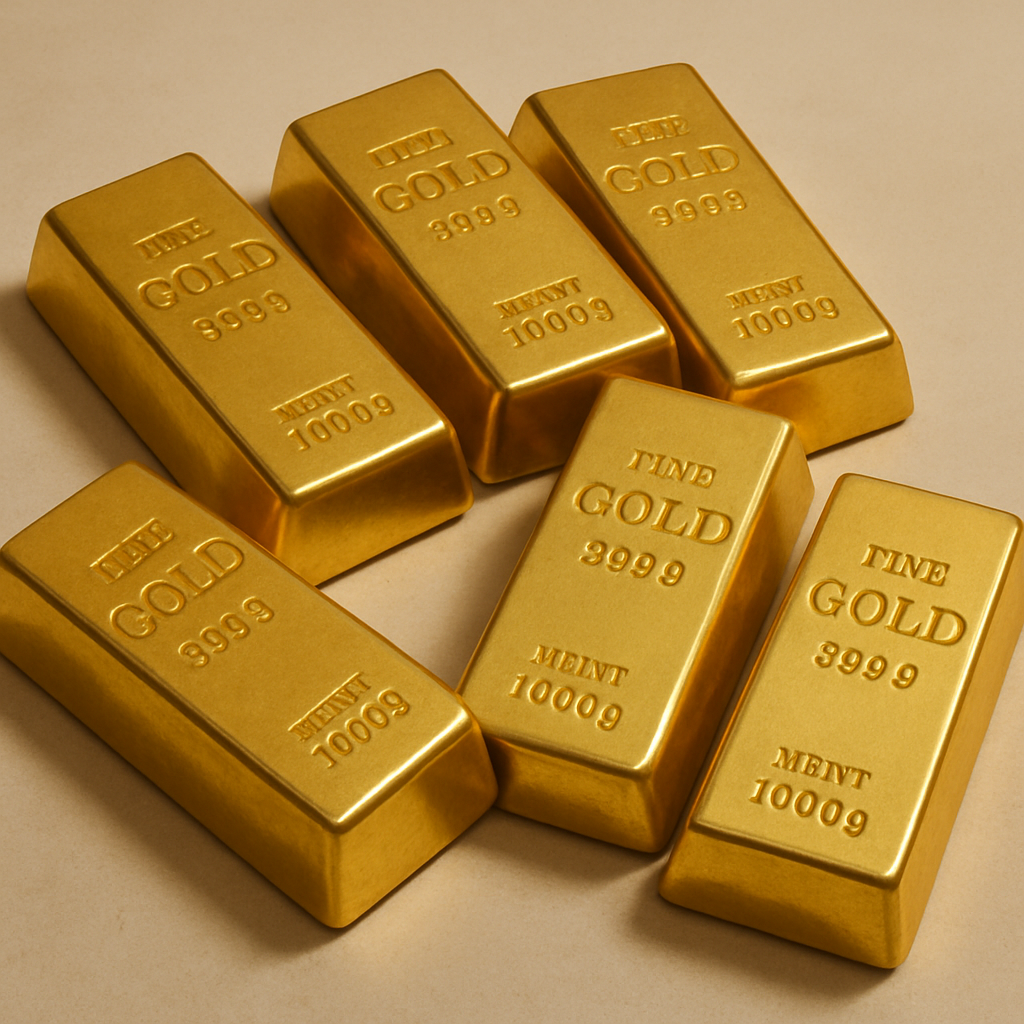
Gold in Germany
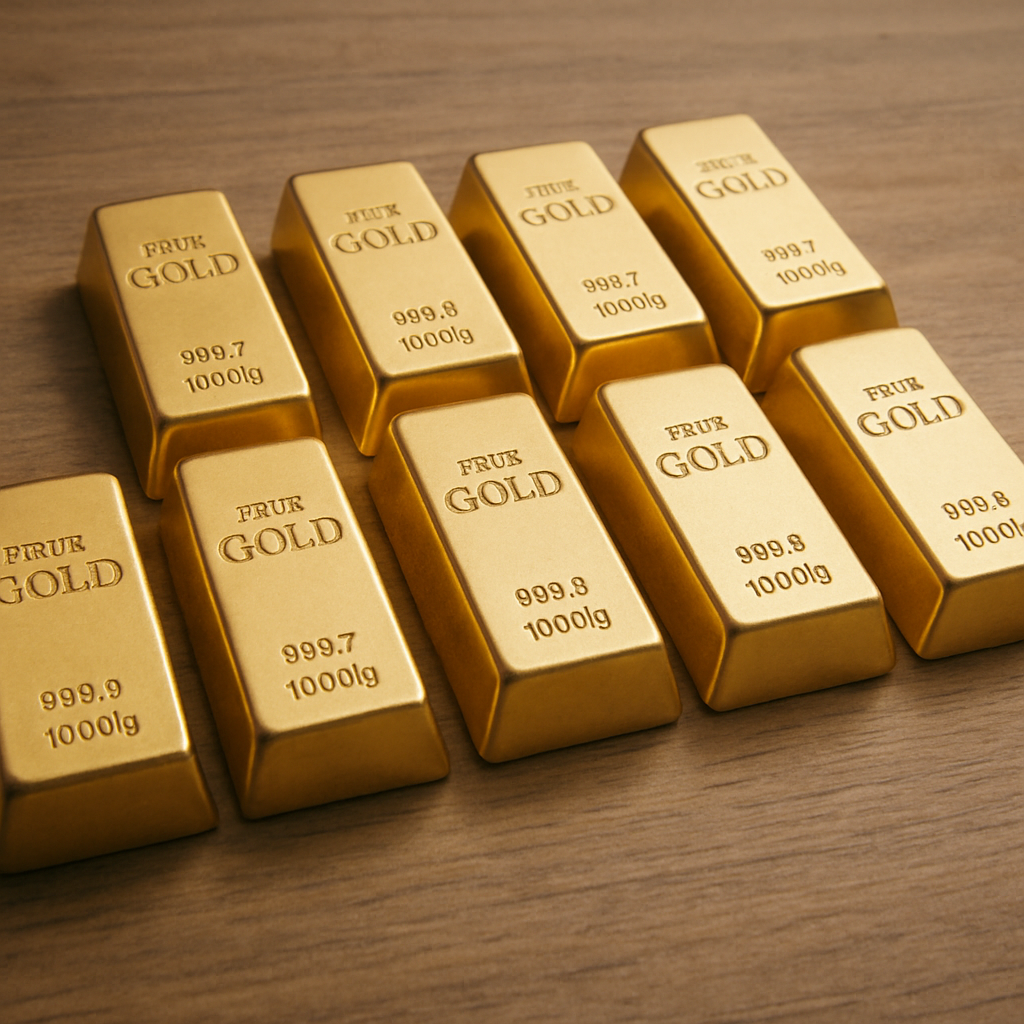
Introduction
Few countries in the world have a relationship with gold quite like Germany. It is home to the second largest official gold reserve on the planet, a jewelry and refining industry that stretches back centuries, rivers that once produced enough placer gold to mint entire coin series, and one of the friendliest tax regimes in Europe for private investors who want to own the metal themselves. Whether you are curious about the Bundesbank vaults, thinking about buying your first gold coin, or simply want to understand why gold keeps making German headlines in 2026, this guide brings everything together in one place.
We will walk through the history of gold in German lands, the size and location of the country’s central bank reserves, the ongoing political debate about repatriating gold stored abroad, today’s market price and what drives it, the practical side of buying and selling gold as a private individual, the tax rules that make Germany unusually attractive for gold investors, and the safest ways to store your bullion once you own it.
Why Gold Still Matters to Germans
Germany’s relationship with gold is not a passing trend driven by a single news cycle. It is rooted in economic memory. The country experienced two catastrophic currency collapses in the twentieth century, the hyperinflation of the early 1920s and the currency reform after the Second World War, and both events left a lasting cultural respect for tangible assets that cannot be printed into worthlessness. That historical memory helps explain why German households are consistently ranked among the largest private holders of physical gold in Europe.
At the same time, gold is deeply embedded in the country’s institutional identity. The European Central Bank is headquartered in Frankfurt, the same city that hosts the Bundesbank’s own gold vault, and Germany’s export driven economy accumulated much of its reserve during the postwar economic boom known as the Wirtschaftswunder.
Germany’s Official Gold Reserves: Inside the Bundesbank Vault
The Deutsche Bundesbank currently holds around 3,350 tonnes of gold, making Germany the owner of the second largest sovereign gold reserve in the world, trailing only the United States. At today’s elevated gold prices, that hoard is worth somewhere in the region of four hundred billion euros, and it accounts for roughly two thirds of the nation’s total foreign reserves.
How the Reserve Was Built
Germany’s gold pile traces back to the Bretton Woods system established in 1944, under which the United States dollar was pegged to gold and other currencies were pegged to the dollar. Germany joined this system in 1952, and it was during the years of rapid postwar export growth that the Bundesbank accumulated the bulk of its holdings, settling trade surpluses in gold under mechanisms such as the European Payments Union.
Where the Gold Is Stored Today
Bundesbank gold is currently divided among four storage locations. Frankfurt now holds the largest single share of the reserve, roughly half of the total, after a multi year repatriation program that concluded in the middle of the last decade and moved hundreds of tonnes home from Paris and New York. The Federal Reserve Bank of New York still holds around thirty seven percent of the total reserve, while the Bank of England in London holds around thirteen percent. The historical share once held at the Banque de France in Paris was fully repatriated to Frankfurt in 2017 and no longer remains there.
The Repatriation Debate
This distribution has become a genuine political flashpoint in 2026. Rising friction between Washington and European governments, including disputes over tariffs and territorial rhetoric involving Greenland, has revived calls from German politicians, economists, and taxpayer advocacy groups to bring the remaining gold held in New York back to Frankfurt. The Bundesbank maintains that the Federal Reserve remains a fully trustworthy custodian, while a smaller number of voices have even floated selling part of the reserve to ease fiscal pressure, an idea the Bundesbank has firmly resisted.
A Brief History of Gold Mining in Germany
Long before the Bundesbank existed, gold was already being pulled from German soil and German rivers. Archaeological evidence suggests gold working in the region dates back to the Neolithic period, and organized extraction expanded significantly under Roman rule.
The Legendary Rhine Gold
For centuries, prospectors panned the Rhine’s gravel beds for fine gold flakes washed down from deposits in the Swiss Alps. The tradition inspired the famous legend of the Rhinegold found in the medieval epic the Nibelungenlied. During the nineteenth century, gold washing became a genuine cottage industry in regions such as the Grand Duchy of Baden, where recovered river gold was minted into commemorative ducats bearing the names of the rivers from which the metal came.
Mountain Mining Districts
Beyond the Rhine, several mountain regions built their own mining legacies, including the Erzgebirge, whose German name literally translates to Ore Mountains, the Harz Mountains in central Germany, and the Schwarza Valley in Thuringia, often described as the richest gold bearing river system in the country.
How Much Gold Has Germany Actually Produced
Estimates suggest that historical German mining operations recovered around one hundred tonnes of gold from domestic ores over the centuries. Geologists believe a further five hundred to six hundred tonnes of natural gold may still sit undiscovered in German river sediments, mainly along the Rhine, though most deposits are protected within nature reserves or too fine grained for commercial extraction today.
Gold Panning as a Modern Hobby
Interestingly, the old tradition never fully disappeared. Gold panning has enjoyed a genuine revival as a recreational hobby across several German states.
- Bavaria: Danube, Salzach, Alz, Windach, Ammer, Amper, Inn and Isar rivers
- Thuringia: Schwarza, Saale, Weisse Elster, Weida, Werra, Schleuse, Grumpen
- Baden Wurttemberg: Rhine tributaries around Neuenburg and the Black Forest region
- Saxony: rivers linked to the historic Erzgebirge mining district
- Hesse, Rhineland Palatinate, and North Rhine Westphalia: various documented gold bearing waterways
Most finds are tiny flakes rather than large nuggets, though pieces weighing up to around ten grams have occasionally turned up. There is no specific law banning recreational gold panning in most German rivers, although motorized suction dredges and handling fuel on riverbanks are generally prohibited.
Understanding Today’s Gold Price in Germany
Gold prices in Germany track the same global spot price seen everywhere else in the world, converted into euros for the local market. As of mid 2026, gold has been trading at historically elevated levels, with sustained gains over the past year and an even larger increase over a five year horizon. As a mid 2026 reference range, pure twenty four karat gold has been trading at roughly 113 to 118 euros per gram, twenty two karat around 104 to 108 euros per gram, twenty one karat around 99 to 100 euros per gram, eighteen karat around 85 to 88 euros per gram, and fourteen karat around 66 to 67 euros per gram. These figures move daily with the international market and the euro to dollar exchange rate, so treat them as a general guide rather than a live quote.
What Moves the Price
- Central bank buying: many nations, not just Germany, have been expanding gold reserves as a hedge against currency and geopolitical risk
- Inflation concerns: private investors turn to gold because its supply cannot be diluted the way a currency supply can
- Interest rate expectations: falling real interest rates lower the opportunity cost of holding a non yielding asset like gold
- Currency movements: a stronger euro can offset dollar denominated gains, while a weaker euro can amplify them
- Geopolitical tension: trade disputes and repatriation debates tend to boost safe haven demand
Retail Price Versus Spot Price
The spot price quoted online is not exactly what you pay at the counter. Retail premiums cover minting costs, dealer margins, insurance, and logistics. Widely recognized bullion coins carry modest premiums thanks to their liquidity, small bars often carry higher percentage premiums, and larger bars from established refiners generally offer the lowest premium per gram.
How to Buy Gold in Germany
Germany offers one of the most developed and consumer friendly gold markets in Europe, with options ranging from walk in dealers to fully digital platforms.
Physical Dealers and Refiners
Degussa is one of the country’s most recognized names, with branches in Frankfurt, Munich, Berlin and other cities, offering coins, bars, and vault storage services. Pro Aurum maintains locations in Munich, Berlin, Dusseldorf, and Stuttgart and is known for LBMA certified bullion and internationally recognized coins. Reisebank operates gold counters inside train stations and airports nationwide, making same day, in person purchases possible while travelling. Geiger Edelmetalle offers bars across a wide range of weights through multiple branches. Pforzheim, often called the jewelry city, hosts a concentration of refiners specializing in refining, dental gold recycling, and jewelry supply.
Online Platforms
Platforms such as Gold.de allow buyers to compare live prices across multiple German dealers before committing to a purchase, while individual dealer websites allow direct ordering with insured delivery or in store pickup. Always confirm insured, trackable delivery, and keep every invoice and certificate of authenticity.
Banks and Financial Institutions
Some German banks sell gold directly to customers, typically bars in standard investment weights, though prices tend to run higher than at dedicated precious metal dealers. Investors who prefer exposure without physical delivery can use regulated brokers offering exchange traded commodities, futures, and contracts for difference.
Coins, Bars, and Jewelry: Choosing Your Form
- Bullion bars: valued almost entirely for metal content, lowest markup relative to weight, especially in larger sizes
- Investment coins: Krugerrand, Maple Leaf, American Eagle, Britannia, and Wiener Philharmoniker combine gold content with strong global recognizability
- Jewelry: priced for craftsmanship and brand as much as metal content, subject to full VAT, and best viewed as a personal purchase rather than a financial investment
Purchase Limits and Identity Rules
Cash purchases of gold in Germany are permitted without formal identification up to a threshold of two thousand euros. Purchases above that amount require valid identification such as a passport or national identity card. There is no overall limit on how much gold an individual may legally purchase.
Taxes on Gold in Germany
This is where Germany truly distinguishes itself from many other markets, and it is one of the most searched aspects of gold ownership in the country.
VAT Exemption on Investment Gold
Under Section 25c of the German VAT Act, physical investment gold is exempt from value added tax, a rule that has applied domestically since 1993 and across the European Union since the year 2000. To qualify, gold bars must have a purity of at least 995 thousandths, and gold coins must have a purity of at least 900 thousandths, be minted after 1800, be or have been legal tender, and have a market price not exceeding their gold value by more than eighty percent.
Capital Gains and the One Year Holding Rule
Physical gold held as a private asset is treated as a private sale rather than a financial investment. Hold your gold for longer than twelve months and any profit is completely tax free, with no need to declare it at all. Sell within twelve months and profits become taxable only once combined private sale gains for the year exceed a modest exemption threshold of six hundred euros, after which the entire gain becomes taxable at your personal income tax rate.
Tax Treatment at a Glance
Investment gold bars and coins that meet the purity rules are fully exempt from VAT and become completely tax free after twelve months of holding. Collector or numismatic coins that fall outside the investment gold rules are taxed under a margin scheme, meaning VAT applies only to the dealer’s markup, and they too become tax free after twelve months of holding. Gold jewelry carries the full standard VAT rate but still becomes tax free after twelve months of holding, exactly like silver, platinum, and palladium bars or coins, which also carry full standard VAT. Gold exchange traded funds are not eligible for any VAT exemption since they are treated as securities, and they remain subject to capital gains tax regardless of how long you hold them. Gold ETCs that carry a physical delivery right are also treated as securities for VAT purposes, but some tax authorities treat them like physical gold for capital gains purposes after twelve months of holding.
Physical Gold Versus Paper Gold for Tax Purposes
Gold exchange traded funds are generally treated as securities and remain subject to capital gains taxation regardless of holding period. Gold backed exchange traded commodities occupy a middle ground, since some structures grant a contractual right to demand physical delivery, though these products still carry counterparty risk because they legally represent a claim against the issuer rather than direct ownership of allocated metal.
Storing Your Gold Safely
Owning gold is only half the equation. Deciding where to keep it matters just as much for security, insurance, and tax documentation.
A home safe offers convenience and a one time purchase cost, but its security depends entirely on the safe’s own rating, and home insurance often caps precious metal coverage unless the holding is specifically declared. A bank safe deposit box offers high security for an annual rental fee, though access is limited to the bank’s opening hours and insurance is not automatic. Professional dealer vault storage offers very high security for an ongoing storage fee and often includes insurance as part of the service, which can also simplify future resale. Bonded warehouse storage similarly offers very high security for an ongoing fee and is treated as sitting outside normal customs and tax territory, a structure more commonly used for VAT liable metals like silver.
Whichever method you choose, keep your original purchase invoices, assay certificates, and any related correspondence in a safe, separate location from the metal itself. These documents establish your purchase date for the twelve month tax rule and confirm authenticity for resale.
Gold Jewelry and the Craft Tradition
Beyond bullion, Germany maintains a genuine jewelry and goldsmithing culture. Pforzheim’s reputation as the jewelry city reflects generations of craftsmanship and a concentration of refining expertise. In everyday retail, eighteen karat gold, representing seventy five percent purity, is the most common standard for jewelry sold in Germany, differing from the twenty two or twenty four karat preferences seen in parts of Asia and the Middle East.
Gold as Part of a Modern Investment Strategy
For many German households, gold functions as a form of portfolio insurance rather than a primary growth asset.
Strengths
- Tends to hold value during currency devaluation or high inflation
- Historically low correlation with equities and bonds
- No counterparty risk in physical form
Limitations
- Generates no yield, dividend, or interest while held
- Can be volatile over shorter time horizons
- Currency effects between the dollar priced global market and the euro add unpredictability
Financial advisors commonly suggest gold occupy a modest, deliberate slice of an overall portfolio, often cited in the range of five to fifteen percent depending on individual risk tolerance and goals.
Ways to Gain Exposure
Physical bars and coins offer direct, allocated ownership and suit long term holders who want the full tax free benefit and zero counterparty risk. Gold savings plans offer direct ownership built up gradually and suit investors who prefer regular, smaller purchases over time. Gold ETFs and ETCs offer a security or contractual claim rather than direct ownership and suit investors who prioritize liquidity and ease of trading. Gold mining shares offer equity ownership in a company and suit investors comfortable with equity market risk in exchange for higher potential upside.
The Road Ahead for Gold in Germany
Looking toward the remainder of 2026 and beyond, several themes seem likely to keep gold in the German public conversation. The political debate over repatriating the portion of the Bundesbank’s reserve still held in New York shows no sign of fading, particularly as transatlantic relations remain strained over trade and security issues. Sustained global central bank buying, persistent inflation concerns, and ongoing geopolitical uncertainty all continue to support elevated gold prices.
Conclusion
Gold in Germany is not a single story but several overlapping ones. It is the story of a national reserve built during the postwar economic miracle and now sitting at the center of a live political debate about sovereignty and trust. It is the story of rivers and mountains that quietly produced gold for two thousand years and still attract hobbyist panners today. It is the story of a modern, well regulated private market where VAT exemptions and a generous one year capital gains rule make physical ownership genuinely attractive compared to most other countries.
Frequently Asked Questions About Gold in Germany
How much gold does Germany officially hold
Approximately 3,350 tonnes, the second largest sovereign reserve in the world after the United States.
Where is German gold physically stored
Split across Frankfurt, the Federal Reserve Bank of New York, and the Bank of England in London.
Is buying gold in Germany tax free
Investment grade bars and qualifying coins are VAT exempt, and profits are capital gains tax free after twelve months of holding.
Can I buy gold with cash and no identification
Yes, up to two thousand euros. Larger purchases require valid identification.
Is silver taxed the same way as gold
No, silver is subject to the standard nineteen percent VAT rate as an industrial commodity.
Can you still find gold in German rivers today
Yes, recreational panning remains legal and popular along the Rhine and in parts of Bavaria, Baden Wurttemberg, and Thuringia.
What is the best way for a beginner to start
Small, widely recognised bullion coins or small bars from an established, reputable dealer.