Gold Dust
The Ultimate Guide to Sourcing Gold Dust
Key Takeaways:
What is Gold Dust? Gold dust consists of fine, unrefined particles of gold typically gathered through placer mining or panning. It is highly sought after by refiners, jewelers, and institutional investors.
Who is Pearl Gold Logistics? A specialized logistics and supply chain partner managing the secure transport, verification, and delivery of precious metals, specifically raw gold dust.
Why use a logistics partner? Buying raw gold requires strict adherence to international compliance (KYC/AML), verifiable assaying (purity testing), and highly secure, insured freight—all of which a specialized logistics firm manages.
The Ultimate Guide to Gold Dust: Value, Uses, History, and How to Find It
For centuries, gold has captivated human imagination, driven global exploration, and shaped the foundations of modern economies. While massive, heavy gold nuggets often steal the spotlight in tales of the Gold Rush, the true backbone of historical wealth and modern geological discovery is something much smaller: gold dust.
From the icy streams of the Klondike to modern high-end cosmetic laboratories, gold dust bridges the gap between raw natural resources and refined luxury. Whether you are an aspiring prospector looking to pan your first river, an investor navigating the precious metals market, or simply a geology enthusiast, understanding the nuances of fine gold is essential.
In this comprehensive, expertly curated guide, we will explore exactly what gold dust is, how it forms geologically, its modern and historical uses, how it is valued in today’s market, and how you can find it yourself.
What is Gold Dust?
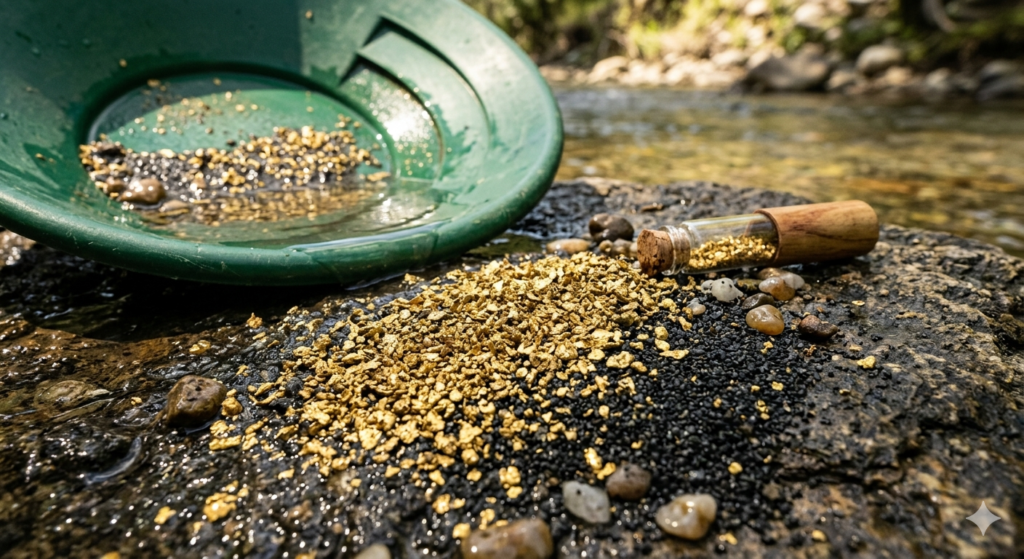
Gold dust refers to tiny, fine particles of naturally occurring native gold that are typically smaller than 1 millimeter in size. It is created naturally when larger gold veins break down over millions of years due to weathering and erosion, eventually washing into rivers and streams where it forms placer deposits.
Unlike solid nuggets, gold dust resembles a heavy, shimmering metallic powder or fine sand. Because gold is chemically stable and does not corrode or tarnish, these microscopic particles maintain their purity and luster even after spending millennia buried in riverbeds or soil.
The Geology of Fine Gold
To understand gold dust, you must understand how gold is distributed within the Earth. Gold originates deep within the Earth’s crust and is often pushed toward the surface by hydrothermal fluids. When these fluids cool, they leave behind gold deposits, frequently encased within quartz veins. This is known as lode gold or “hard rock” gold.
Over millions of years, tectonic shifts, earthquakes, glaciers, and relentless water flow crack these rocks open. Wind and water erode the quartz, releasing the gold trapped inside. Because gold is incredibly heavy—weighing roughly 19.3 times more than water—it resists being carried far by weak currents. Instead, the gold is ground down against other rocks, fracturing into the fine particles we call gold dust, which eventually settles into placer deposits at the bottom of streams, rivers, and oceans.
Gold Dust vs. Gold Nuggets: What is the Difference?
While both are forms of naturally occurring native gold, gold dust and gold nuggets differ significantly in size, rarity, purity, and market value.
If you are browsing the precious metals market or evaluating your prospecting finds, understanding these differences is crucial.
| Feature | Gold Dust | Gold Nuggets |
| Size & Form | Fine, powder-like particles, typically less than 1mm in diameter. | Solid, naturally occurring lumps of gold, ranging from a few grams to several kilograms. |
| Rarity | Highly abundant. The vast majority of naturally occurring placer gold exists as dust. | Extremely rare. Less than 2% of all gold ever mined is in nugget form. |
| Purity | Often mixed with black sand, iron, and other impurities. Usually requires smelting and refining. | Typically higher natural purity, though they may still contain inclusions of quartz or copper. |
| Market Value | Priced below the “spot price” of gold due to the refining costs required to purify it. | Commands a high premium above the spot price due to its rarity and collector value. |
| Extraction Method | Recovered using panning, sluicing, dredging, and chemical leaching. | Found using metal detectors, hard rock mining, or heavy commercial dredging. |
The Fascinating History of Gold Dust
The history of gold dust is the history of human commerce. Long before standardized, government-minted coins became the global norm, gold dust served as a universal, decentralized currency.
The West African Gold Trade
In the 14th to 19th centuries, gold dust was the primary currency of the Ashanti Empire (modern-day Ghana). Trade was conducted using intricately crafted brass weights, known as Ashanti gold weights, which were used on balance scales to measure out exact quantities of gold dust for daily transactions—from buying food to paying taxes.
The California Gold Rush (1848)
The modern obsession with gold dust began in 1848 when merchant Samuel Brannan sprinted through the streets of San Francisco holding a small vial of gold dust, shouting, “Gold! Gold! Gold from the American River!” This single event sparked the California Gold Rush, drawing hundreds of thousands of people to the American West.
During this era, paper money was scarce, and gold dust became the de facto currency of mining towns. Miners would pay for whiskey, lodging, and supplies with a “pinch” of gold dust—literally the amount of dust a bartender could pinch between their thumb and forefinger. (This is where the phrase “How much can you raise in a pinch?” originates).
Where to Find Gold Dust: Geological Indicators
If you want to find gold dust in the wild, you cannot simply dig a hole anywhere. You must learn to read the land. Expert prospectors look for specific geological indicators that suggest the presence of precious metals.
1. Quartz Vein Outcrops
Gold and quartz are geological cousins. Because they are often formed together in hydrothermal vents, finding heavily fractured, rotting, or iron-stained quartz on the surface of the ground is a prime indicator that gold may be nearby.
2. Iron Staining and Gossans
When rocks contain a high amount of iron sulfides (like pyrite), weathering turns them a rusty red, orange, or yellow color. These highly oxidized, iron-stained rocks are known as gossans. Because acidic mineral solutions that create gossans also carry gold, rust-colored soil or rocks are an excellent place to begin sampling.
3. Contact Zones and Fault Lines
Gold is lazy; it takes the path of least resistance. When tectonic plates shift, they create faults, fractures, and contact zones (where two different types of rock meet). Hydrothermal fluids rush into these cracks, depositing gold as they cool. Prospecting along these geological fault lines yields some of the highest concentrations of fine gold.
4. Black Sand
If you are panning in a river, black sand is your best friend. Black sand consists of heavy iron oxides like magnetite and hematite. Because gold is also incredibly heavy, water currents drop black sand and gold in the exact same locations. If you find deep deposits of black sand behind a boulder in a river, there is a high probability that gold dust is hiding beneath it.
How to Pan for Gold Dust: A Step-by-Step Guide
Finding gold dust in a river is one of the most accessible and rewarding outdoor hobbies. Because gold dust is so fine, it requires specialized techniques to separate it from ordinary river dirt.
Essential Prospecting Equipment
Before heading to the river, ensure you have the bare minimum equipment:-
A Gold Pan: A plastic pan (usually green or black for high contrast against yellow gold) with “riffles” or ridges on one side to catch the gold.
-
A Classifier (Sieve): A screen used to filter out large rocks and pebbles.
-
A Snuffer Bottle: A small plastic vacuum bottle used to suck up the tiny gold flakes from the water in your pan.
-
A Shovel and Crevice Tool: To dig dirt and scrape out the bedrock cracks where gold hides.
The Panning Process
Step 1: Locate the “Paydirt”
Gold is heavy. It does not float in the current. It sinks as deep as it can go until it hits solid bedrock. Look for the “inside bends” of rivers where water slows down, dropping its heavy cargo. Dig behind large boulders, or use your crevice tool to scrape out the dirt trapped in the cracks of the bedrock.
Step 2: Classify the Material
Place your classifier over your gold pan and shovel your dirt into the screen. Pour water over it and shake it. The large, worthless rocks will stay in the screen, while the fine dirt, black sand, and gold dust will fall into the pan.
Step 3: Stratify the Pan
Submerge your pan underwater. Vigorously shake the pan back and forth. This action is called stratification. Because gold is the heaviest material in the pan, the aggressive shaking forces the gold dust to sink past the lighter dirt and settle at the absolute bottom of the pan.
Step 4: Wash Away the Lighter Dirt
Tilt the pan slightly forward underwater. Gently swirl the water in circles, allowing the water to carry the top layer of light, blonde sand over the edge of the pan. Periodically re-shake the pan to ensure the gold stays at the bottom.
Step 5: Isolate the Black Sand and Gold
Repeat Step 4 until you are left with only a few tablespoons of material—mostly heavy black sand and, hopefully, gold dust. Carefully swirl a small amount of water around the edge of the pan to separate the black sand from the gold. The yellow flakes will trail behind the black sand.
Step 6: Snuff the Gold
Squeeze your snuffer bottle, place the nozzle over the gold dust, and release. The vacuum will suck the gold safely into the bottle!
The Modern Uses of Gold Dust
While it is no longer used to buy whiskey in saloons, gold dust is far from obsolete. Today, it is utilized across a fascinating array of industries due to its chemical stability, high electrical conductivity, and aesthetic appeal.
1. High-Tech and Aerospace Manufacturing
Gold is highly ductile, conductive, and immune to corrosion. Microscopic gold dust and fine gold wiring are used extensively in the manufacturing of smartphones, computers, GPS systems, and medical devices. In the aerospace industry, fine gold particles are used to coat the visors of astronaut helmets and satellite components to reflect infrared radiation and heat.
2. Luxury Cosmetics and Skincare
In recent years, the beauty industry has embraced 24-karat gold dust. Luxury brands incorporate microscopic gold particles into face masks, anti-aging serums, and moisturizers. While scientific consensus on gold’s dermal benefits is mixed, cosmetic companies claim that gold dust improves blood circulation, boosts collagen depletion, and leaves the skin with a radiant, youthful glow.
3. The Culinary Arts: Edible Gold
Gold is biologically inert, meaning it passes through the human digestive system without being absorbed or causing harm. High-end restaurants and luxury chocolatiers use 24K edible gold dust to garnish steaks, decorate artisan truffles, and rim the glasses of expensive cocktails, adding an ultimate touch of visual opulence.
4. Bespoke Jewelry and Art
Jewelers frequently use gold dust in a technique known as inlaying. Fine gold particles are mixed with resins or hammered into carved grooves in wood, titanium, or tungsten rings to create striking, glittering designs. It is also heavily used in Kintsugi, the traditional Japanese art of repairing broken pottery with lacquer mixed with gold dust, treating breakage and repair as part of the object’s beautiful history.
How Much is Gold Dust Worth? (Understanding Value)
Determining the exact value of a vial of gold dust is more complex than checking the daily stock market. While the global “spot price” of gold (traded by the Troy Ounce, which equals 31.1 grams) sets the baseline, raw gold dust is rarely worth 100% of the spot price.
Factors Influencing Gold Dust Value:
-
Purity (Karat): Naturally occurring gold dust is never 24K (100% pure). It is almost always alloyed naturally with silver, copper, or platinum. Most river-panned gold dust ranges from 18K to 22K (75% to 90% purity).
-
Impurities: Raw gold dust often contains microscopic bits of black sand (iron), quartz, or lead. Buyers will discount the weight of these impurities.
-
Refining Costs: Because a jeweler or mint cannot use raw gold dust immediately, it must be melted down, chemically treated, and refined to separate the pure gold from the natural alloys. Refiners typically charge a fee (or take a percentage of the gold) to perform this service.
The Bottom Line on Value: If the spot price of gold is $2,000 per ounce, a prospector selling raw, unrefined gold dust can typically expect to receive between 70% and 85% of that spot price from a dealer or refiner, depending on the visual purity of the dust.
How to Buy and Sell Gold Dust Safely
The gold dust market can be highly lucrative, but it is also rife with scams. Because it is a powder, it is incredibly easy for unscrupulous sellers to adulterate the product.
Common Gold Dust Scams
-
Fool’s Gold (Pyrite): Iron sulfide, known as “Fool’s Gold,” mimics the color of gold. However, pyrite is brittle and shatters when hit with a hammer, whereas real gold is malleable and simply flattens.
-
Brass Shavings: Scammers will sometimes file down brass hardware into a fine powder and mix it with real gold dust to increase the weight.
-
The “African Gold Dust” Advance Fee Fraud: A common online scam involves a “seller” claiming to have massive quantities of cheap gold dust in West Africa, asking the buyer to pay upfront for customs, shipping, or refining fees, only to disappear once the money is sent.
How to Test and Verify Gold Dust
If you are buying gold dust, you must verify its authenticity:
-
The Nitric Acid Test: Gold is a noble metal and does not react to most acids. If you place a drop of nitric acid on gold dust and it bubbles, smokes, or turns green, it is fake or heavily alloyed with base metals. Real gold will show no reaction.
-
Specific Gravity Testing: Because gold is immensely dense, professionals use water displacement and specific gravity scales to confirm the density of the metal, ensuring it matches the profile of gold.
-
XRF Spectrometers: Reputable precious metal dealers use X-Ray Fluorescence (XRF) guns to shoot x-rays into the dust. The machine instantly reads the exact chemical composition of the metal, identifying the precise percentage of gold, silver, and copper without damaging the product.
Always buy and sell gold dust through verified, licensed precious metal refineries or established bullion dealers to avoid financial loss.
The Environmental Impact of Gold Dust Mining
It is impossible to discuss gold dust without addressing the modern environmental and ethical concerns surrounding its extraction.
Artisanal and Small-Scale Gold Mining (ASGM)
Millions of people in developing nations rely on Artisanal and Small-Scale Gold Mining for their livelihood. These independent miners pan and sluice riverbeds in search of fine gold dust to feed their families.
The Mercury Problem
The most pressing environmental issue in the ASGM sector is the use of mercury. Because gold dust is incredibly fine and difficult to separate from black sand, miners often add liquid mercury to their pans. The mercury binds to the gold dust, creating an amalgam ball. The miners then use blowtorches to burn off the mercury, leaving the pure gold behind.
Unfortunately, this process releases highly toxic mercury vapors into the atmosphere and contaminates local river systems, devastating wildlife and human neurological health.
The Push for Sustainable Gold
In recent years, global initiatives like the Minamata Convention on Mercury have worked to introduce mercury-free extraction methods to artisanal miners. Techniques like using “shaker tables,” centrifuges, and borax-smelting allow miners to extract fine gold dust efficiently without poisoning their local ecosystems. As a consumer, seeking out “Fairmined” or “Ethical Gold” ensures that the gold dust used in your jewelry or electronics was sourced without exploiting labourers or destroying the environment.